

Whether you’re planning for retirement, pursuing a new venture, or passing on your legacy, the sale of your business could be one of the most significant transitions of your life. The decision to sell is often an emotional one. Selling brings opportunity and change, and what you get out of your sale depends on the preparation you’ve put in.
Starting early gives you the time to set your own priorities, refine company operations, plan your positioning, and maximize value. Without proper planning, you risk leaving money on the table, encountering deal-killing obstacles, or struggling to find the right buyer. That’s why we encourage owners to speak to us years before they sell so they can clarify their own objectives, understand the business’s value in the market — including its strengths and weaknesses.
Clarify Your Objectives
Before you engage with potential buyers or start preparing materials, think about why you’re selling and what you want from the transition. How important is your legacy? Your employees and customers? Your ties to the community. There are a range of things you will care about in addition to transaction value. Thinking about your goals and having a sense of the best timing will improve your chances of success.. Your reason for selling your business could be any one or combination of the following:
- Retirement
- Financial liquidity
- Significant life changes or health concerns
- Starting a new venture
- Positive market conditions
- An attractive acquisition offer out of the blue
- Seeking Next Gen or fresh leadership
Beyond the financial, consider your personal goals. Do you want to remain involved in the business post-sale, perhaps in a consulting capacity, or are you looking for a full transition? Establish a clear order of priorities to help you define what a successful sale would look. Prioritize what’s most important to you — maximizing the sale price, protecting your employees, maintaining customer relationships, or preserving the company culture you built.
You’ll also need to establish a realistic timeline, planning backwards from when you want to close the deal. Most successful transactions require planning well in advance — ideally 18 to 24 months or longer before going to market. Preparing in advance and having a less urgent or more flexible deadline can give you leverage when negotiating with buyers. If your goals and life circumstances make selling sooner necessary, it’s important to recognize that and start preparing as soon as possible.
Assess Market Value and Pricing
Understanding what your business is worth is crucial to preparing for a successful sale. Understandably, many business owners have an emotional attachment to their business that might skew their estimation of the company’s value. Others may base their expectations on outdated information or news of a sale in their industry. Getting a professional market-based business valuation gives you an objective, assessment of what your company’s fair market value might be today.
Business valuations consider multiple factors, including:
- Revenue trends
- Profitability
- Customer or contract base and retention
- Growth potential
- Competitive positioning
- Current market conditions
Different industries use different valuation methods, ranging from earnings multiples to asset-based approaches and market comparables.
Beyond assessing current value, a valuation also helps you develop a strategic growth plan so you can focus on how to move ahead before you sell. A valuation will identify strengths that can attract buyers and weaknesses that might need addressing before going to market. With targeted preparation and expert guidance, you could significantly increase your business’s value before going to market.
Organize Financials and Compliance
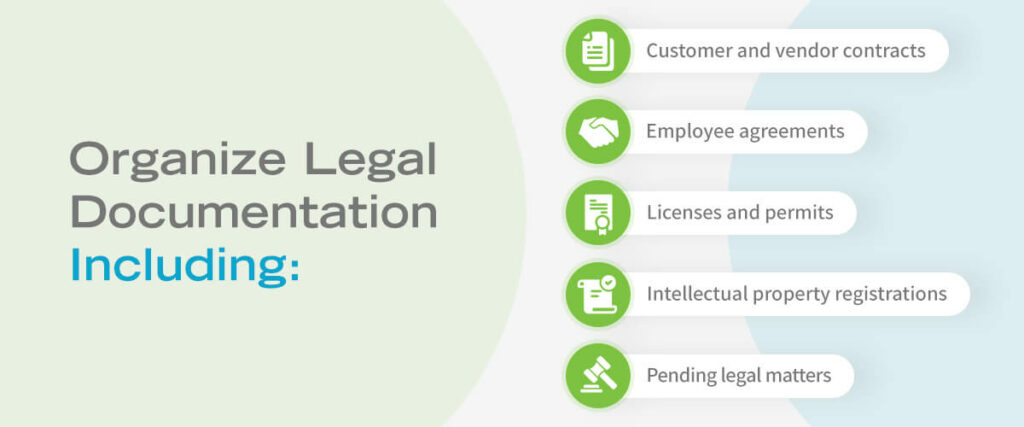
Documenting your operations, including standard operating procedures, workflows, and key employee roles, shows that the business can function effectively without your constant involvement, which is attractive to buyers wanting a smooth transition.
Consult an M&A Advisor
Preparing your business for sale involves complex steps that require specialized expertise. This is where an experienced mergers and acquisitions (M&A) advisor who knows your industry can help guide your preparations for a successful sale. Industry-expert advisors understand buyer expectations, market dynamics, and the nuances of structuring deals that maximize value while minimizing risk. An M&A advisor can help in several ways:
- Industry expertise: Sectors like government contracting, software-as-a-service (SaaS), and commercial services each have distinct factors influencing sales. M&A advisors experienced in your sector know what buyers in your industry expect and how to position your business accordingly. They understand the unique financial metrics, regulatory requirements, and competitive factors that drive valuations in your market.
- Identifying and engaging the right buyers: an M&A advisor who knows your industry can help you identify the right buyer profile for your business. Strategic buyers — often competitors or companies in adjacent markets — might value your business differently than financial buyers like private equity firms. sbLiftOff has a large data base of active buyers interested in your industry.
- Confidentiality: Confidentiality is critical during the sale process. If employees, customers, or competitors learn about the sale prematurely, it can damage your business’s value. M&A advisors manage this sensitively, using tools like blind teasers and nondisclosure agreements (NDAs) to protect your interests while marketing your business to qualified buyers.
- Crafting a narrative: M&A advisors craft compelling marketing materials like confidential information memorandums (CIMs) that position your business in the best possible light. They know how to tell your company’s story in a way that’s persuasive to buyers in your industry.
- Structuring favorable deals: Experienced advisors can negotiate better terms, structure deals to minimize tax implications, and optimize the mix of cash at close, seller financing, retained equity, and earnouts. Advisors also coordinate the due diligence process, managing confidential document sharing and keeping deals on track to minimize the risk of deals falling apart.
- Maintaining your focus: M&A advisors allow you to focus on running your business during the sale process. Maintaining strong business performance is critical, since declining revenue or operational issues during the sale can reduce your valuation or deter buyers. Advisors manage the entire sale process, from initial assessments through post-sale transition planning, ensuring a smooth handoff for employees, customers, and new ownership.
Plan Your Transition With sbLiftOff
How well you plan to sell your business decides the value you receive and the legacy you leave behind. At sbLiftOff, we guide business owners through every step, from valuation and financial readiness to identifying the right buyers and structuring favorable deals.
sbLiftOff is a trusted M&A advisory firm with a track record of closing successful sales for GovCon, Software, SaaS, and commercial businesses with annual revenue between $20 million and $100 million. Our advisors have closed an aggregate of deals worth over $12 billion. Choose sbLiftOff for white-glove support with:
- Market-based valuations
- Strategic sales story positioning
- Identifying and engaging eager, motivated industry buyers
- Ensuring confidentiality
- Maximizing deal value with expert negotiation on a plethora of deal points
Contact us today to consult an experienced M&A advisor about preparing your business for sale.